AI is changing how patients use health information. It can explain medical terms, summarize visits, help prepare for appointments, support second-opinion questions, and surface possible diagnoses to discuss with a doctor.
But AI works best with context. A generic symptom search gives generic answers. A patient's own visit history gives AI something more useful: the real story of what has happened over time.
That is why recording doctor visits matters.
Key takeaways
- Patients forget 40 to 80 percent of medical information soon after a visit, and nearly half of what they do remember may be wrong.
- After-visit notes capture the plan. They rarely capture the explanation behind it.
- AI answers get sharper when they are grounded in a patient's own visit history instead of a generic symptom search.
- Recording visits and turning them into summaries and transcripts is what creates that history.
- AI is for understanding and preparation. Diagnosis and treatment stay with a licensed clinician.
Patients forget important details
Doctor visits are short, stressful, and full of information. A patient may hear about a diagnosis, medication change, test result, referral, side effect, and follow-up plan in the same appointment.
Research shows how much gets lost. A widely cited review found that patients forget 40 to 80 percent of medical information soon after a visit, and nearly half of what they remember may be incorrect [1].
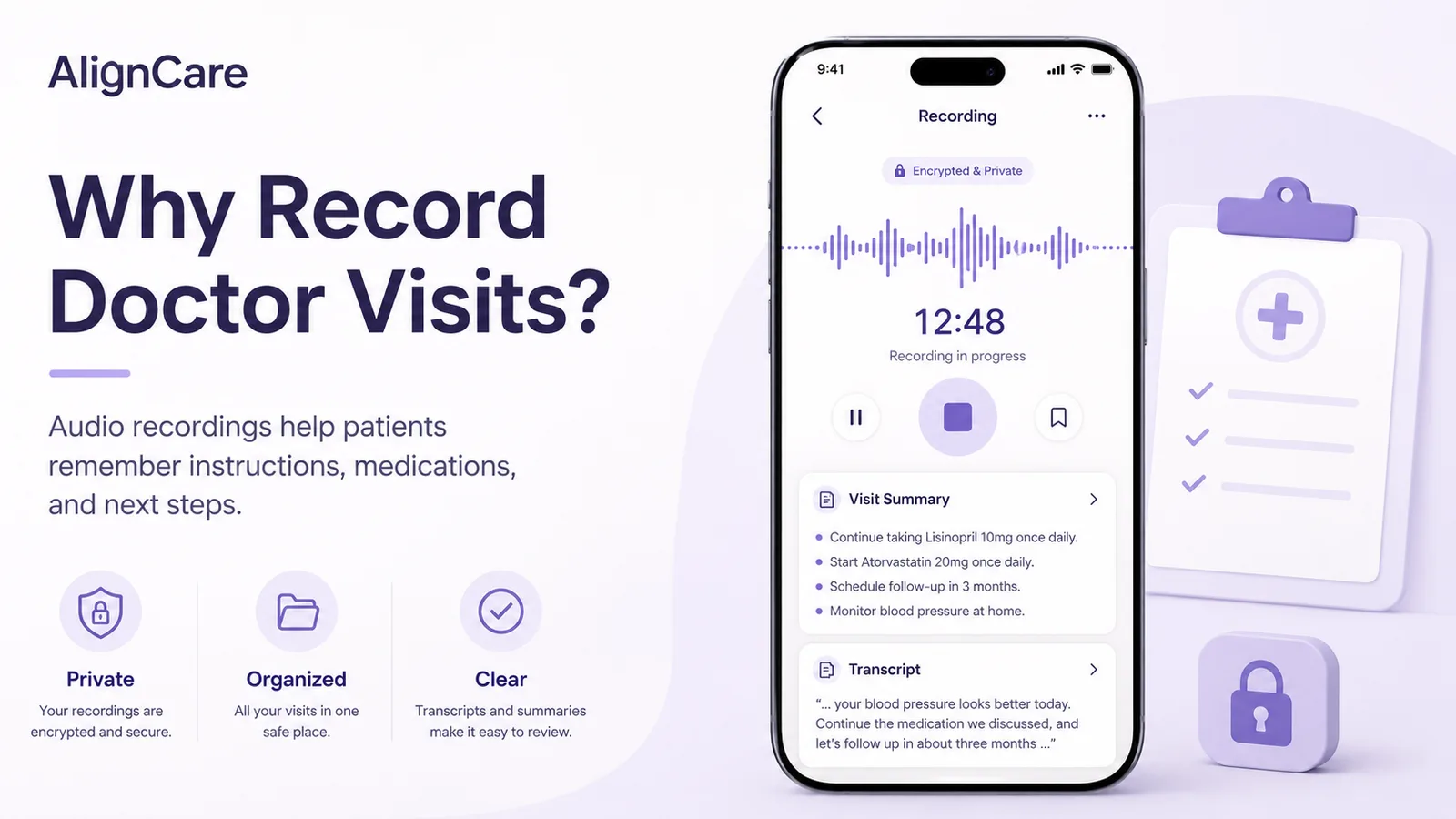
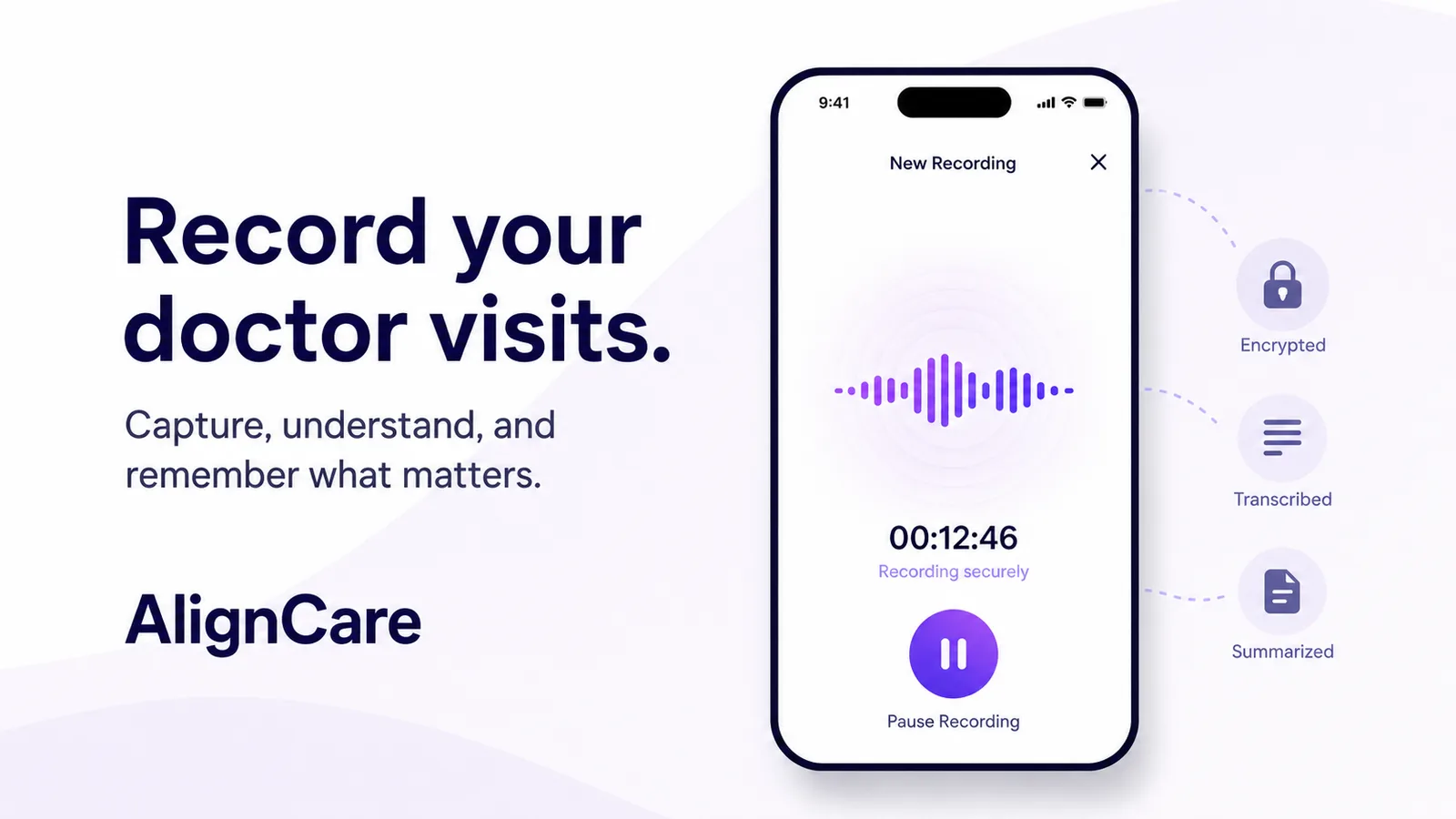
With AlignCare, patients can audio record doctor visits, keep recordings separate from everyday voice memos, and revisit the conversation later. AlignCare is available on iOS and Android, and patient data is encrypted. Recording rules vary by state, so it helps to know the consent laws where you live before your next appointment.
Doctor's notes are not the whole visit
Portal notes and after-visit summaries are useful, but they often capture the plan more than the explanation.
A note may say a medication changed. It may not fully capture why it changed, what options were discussed, what symptoms mattered, or how the doctor explained the decision.
Notes tell patients what happened. Recordings help patients understand what was said. That gap is the main reason patients record their visits.
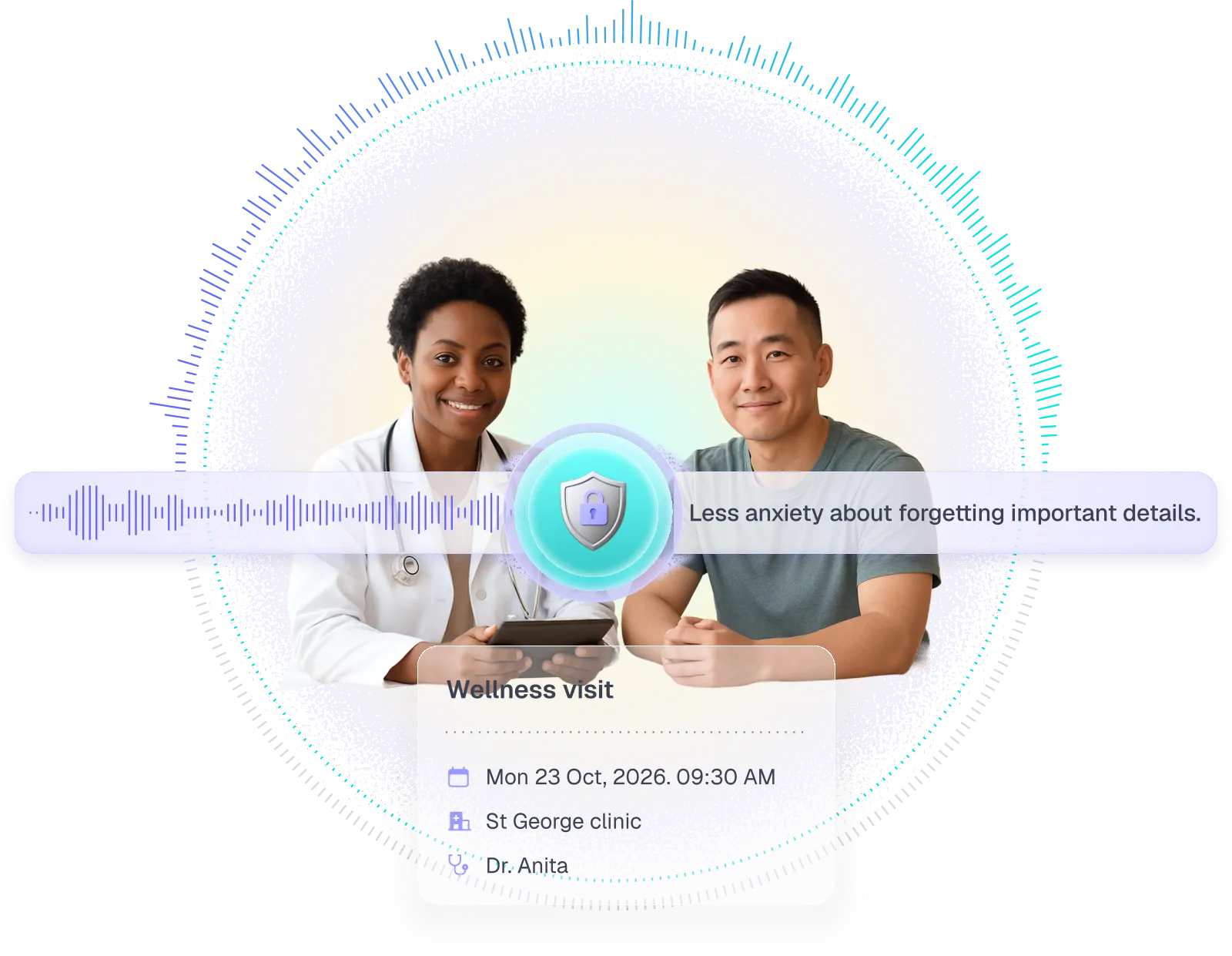
Research on consultation recordings has found benefits for patients, including improved knowledge, recall, feeling informed, decision-making, anxiety, and depression outcomes [2].
AI is more useful with longitudinal history
Healthcare rarely comes down to one symptom or one visit. Symptoms evolve. Medications change. Tests come back. Doctors consider possibilities, rule things out, and adjust the plan.
AI can help patients make sense of that history.
Instead of asking, "Why am I dizzy?" a patient with a recorded history can ask:
- "Could this be related to the medication change from my last visit?"
- "What possible causes have come up across my appointments?"
- "What should I ask if I want a second opinion?"
- "Help me prepare a symptom timeline for my next visit."
- "What follow-up steps should I confirm?"
AI is already showing promise in diagnostic reasoning. Research on large language models has found that AI systems can generate differential diagnoses, meaning possible explanations for symptoms or case details [3].
For patients, the value is not just getting an answer. It is being better prepared for the next conversation with a doctor.
AlignCare turns visits into usable health history
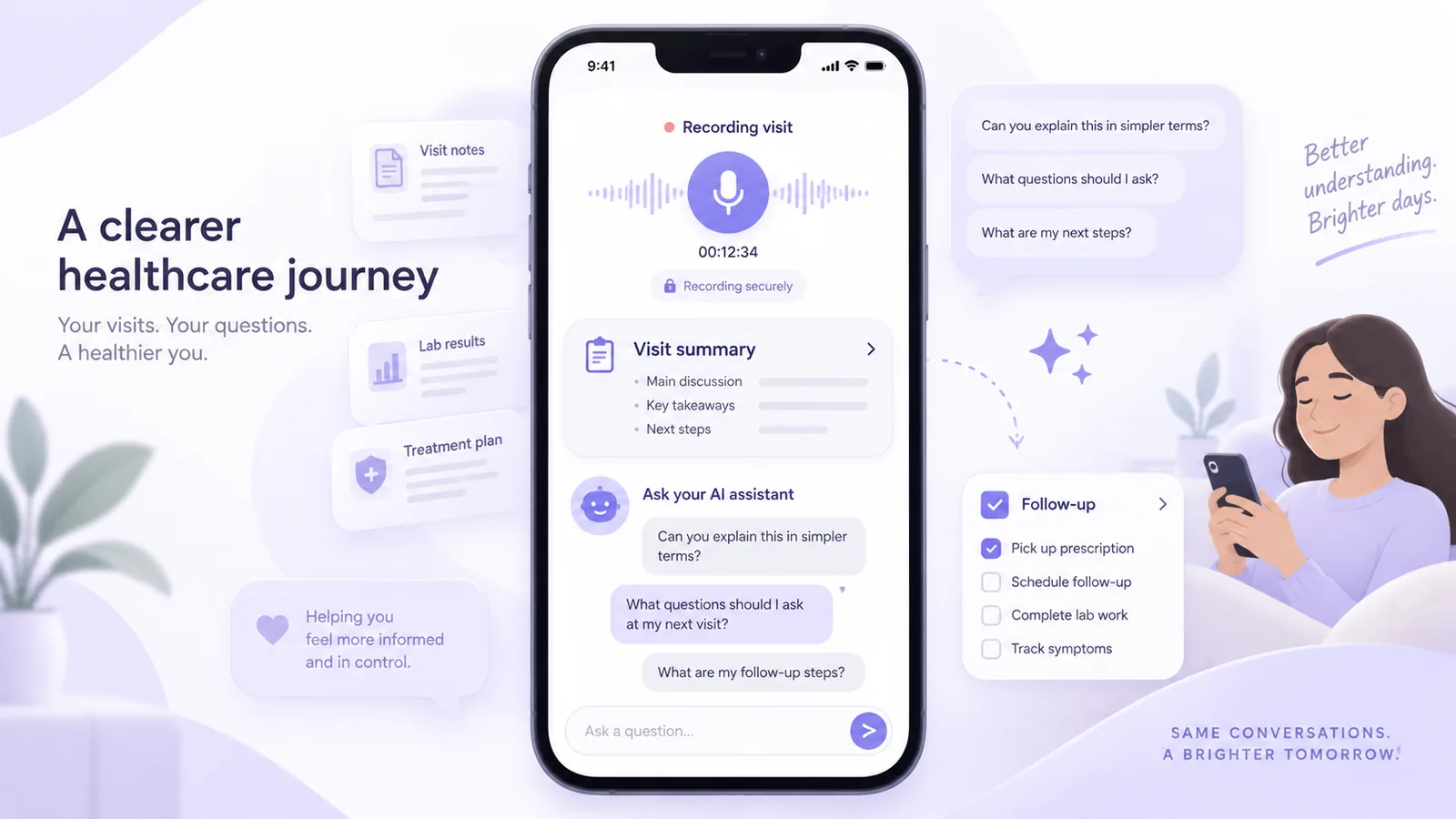
A raw audio file is hard to use. AlignCare is a mobile app that records doctor visits and turns them into organized summaries and transcripts that patients can revisit, search, and understand.
That makes AI more useful. Instead of starting from memory, AI can work from the patient's real visit history, alongside their medication list and any labs or letters kept in their health document library.
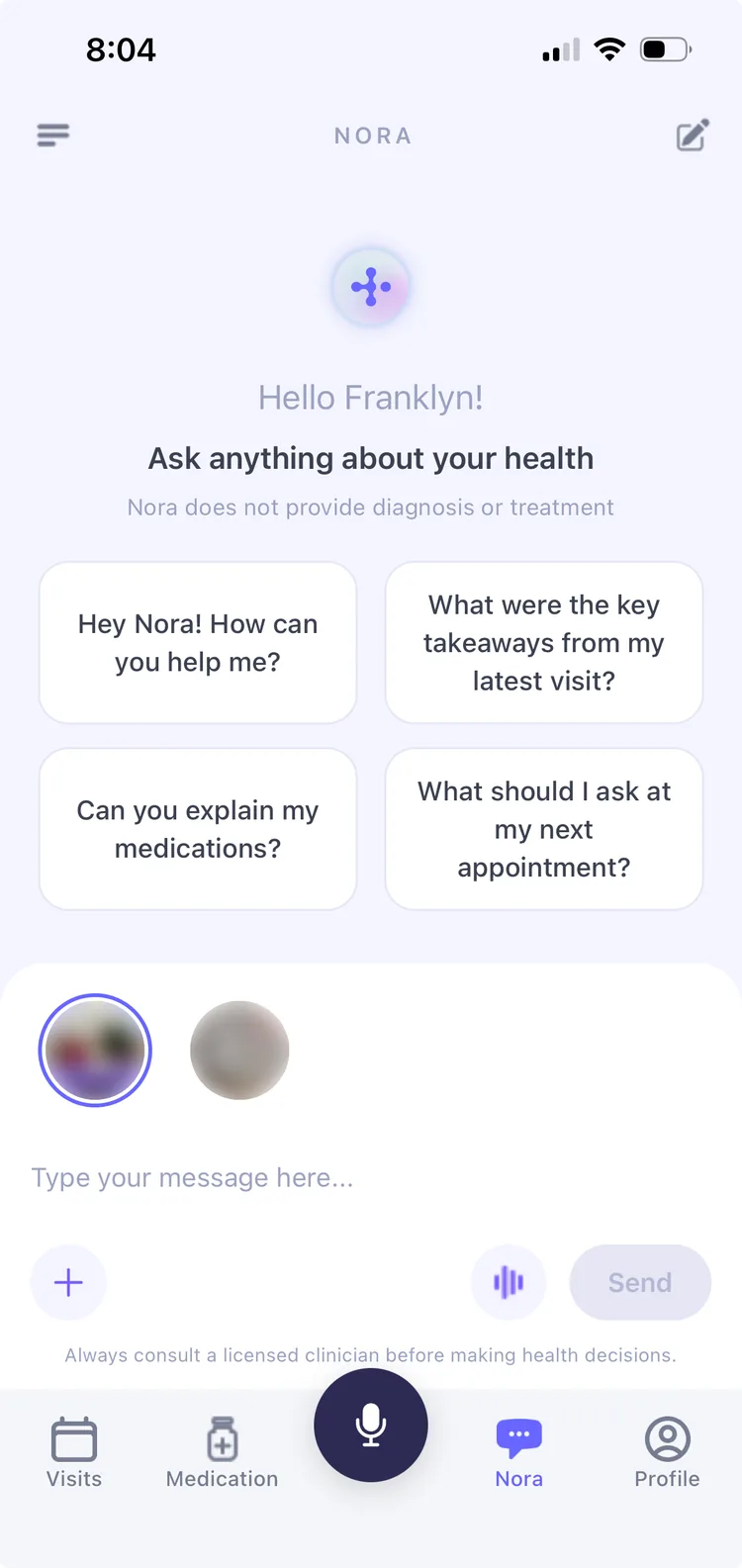
Nora, AlignCare's AI health assistant, is available by voice and chat. Patients can ask Nora about visit summaries, transcripts, medications, and uploaded health documents.
A patient might ask Nora:
- "What possible diagnoses have come up across my visits?"
- "What changed between my last two appointments?"
- "What questions should I ask before starting this treatment?"
- "Help me prepare for a second opinion."
- "Explain this care plan in plain language."
- "Help me write a message to my doctor."
- "What follow-up steps should I make sure are scheduled?"
This is where patient-focused AI becomes powerful: it helps people use their own health story to understand care, prepare questions, and take the next step with more confidence.
The bottom line
AI can help patients understand healthcare, explore possible diagnoses, prepare for visits, and ask better questions. But it needs context.
Doctor visits contain that context. Recording them gives patients a clearer record of what was said, what changed, and what to do next.
Patients should not have to rely on memory alone. With AlignCare and Nora, they can capture their health story and use AI to make sense of it.
References
- Kessels, "Patients' Memory for Medical Information," Journal of the Royal Society of Medicine.
- Rieger et al., "Should Consultation Recording Use Be a Practice Standard?" Psycho-Oncology.
- McDuff et al., "Towards Accurate Differential Diagnosis with Large Language Models," Nature.
Disclaimer
This article is for general informational and educational purposes only. It is not medical advice, legal advice, or a substitute for professional guidance. AlignCare does not provide medical advice, diagnosis, or treatment. Always consult a licensed clinician with questions about your health, diagnosis, medications, or treatment plan. AI tools may make mistakes and should not be used as a replacement for professional medical care, mental health care, emergency care, or crisis support.