Doctor visits can move quickly. In one appointment, your clinician may explain a diagnosis, adjust medications, order tests, review symptoms, and give follow-up instructions. It is easy to leave the office and realize you cannot remember every detail.
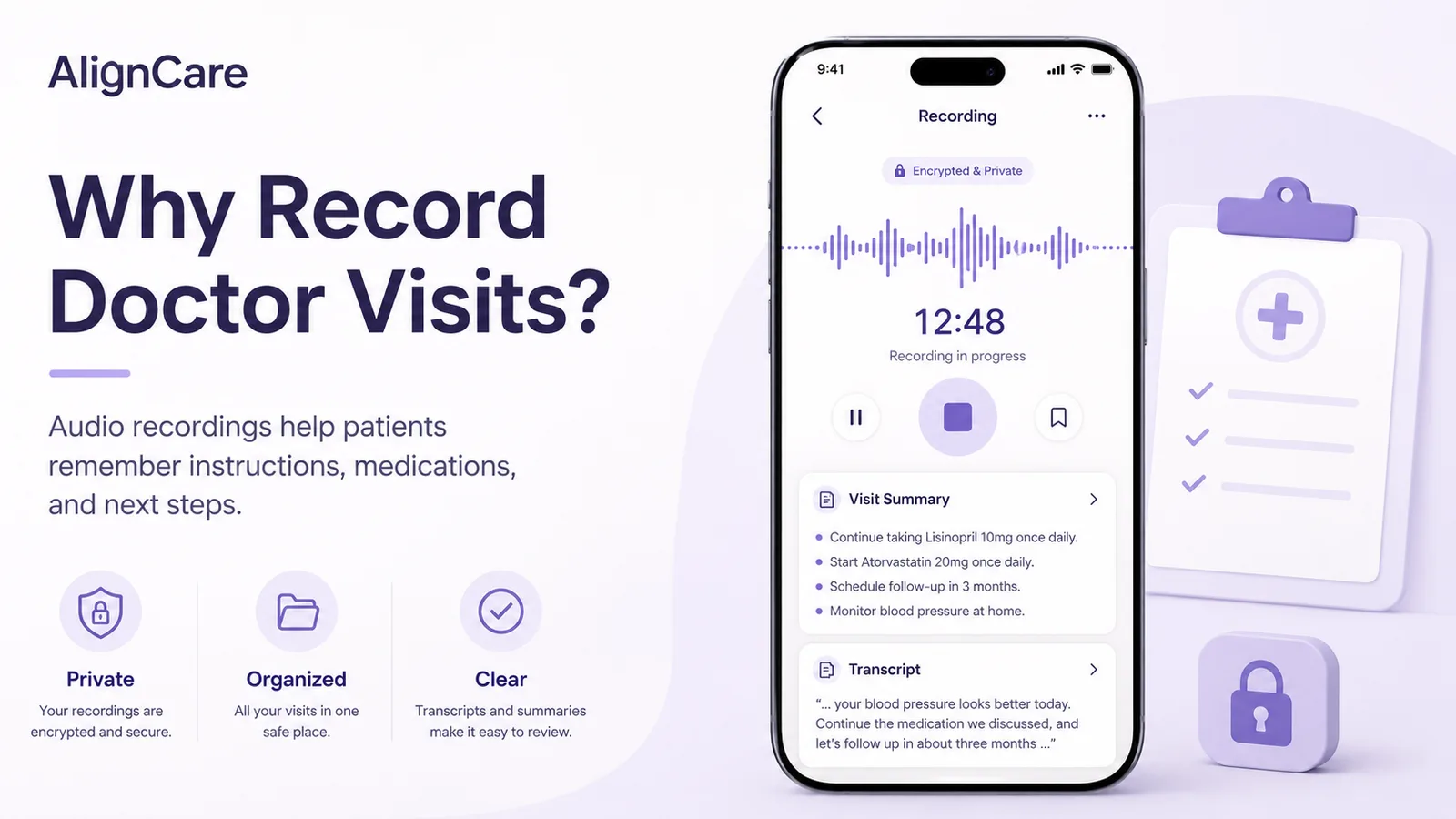
Audio recording a doctor visit can help you replay instructions, share accurate information with a caregiver, and feel more confident about what to do next. Before you press record, it is important to understand your state's consent rules and the best way to bring up recording with your clinician.
Why patients audio record doctor visits
An audio recording can be useful when:
- You are receiving a new diagnosis or treatment plan.
- Your medication instructions are changing.
- A caregiver, spouse, adult child, or family member could not attend.
- You want to replay your clinician's exact instructions later.
- You are managing a chronic condition with multiple providers.
- You want clearer notes for follow-up questions and next steps.
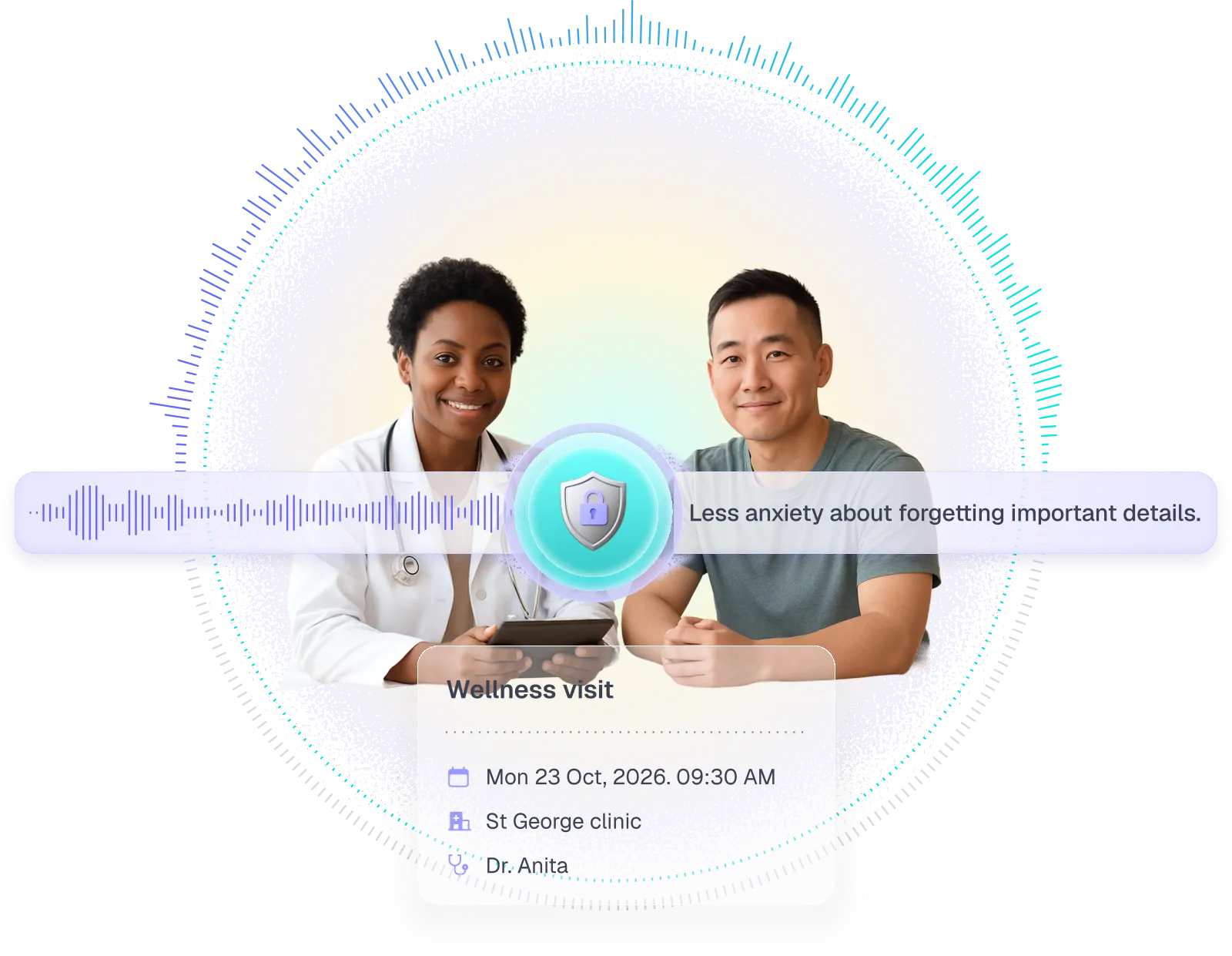
Audio recording can support better understanding, better recall, and better follow-through after an appointment.
One-party vs. all-party consent
Recording laws vary by state. Most states follow a one-party consent rule. Some states require all-party consent, sometimes called two-party or multiparty consent.
One-party consent
In a one-party consent state, you can generally audio record a conversation if you are part of that conversation. For a patient, that usually means you may record your own doctor visit because you are participating in the conversation.
In these states, the clinician's separate consent is generally not required under the state recording-consent law, as long as the recording is not made for an unlawful purpose.
All-party consent
In an all-party consent state, everyone involved in the private conversation generally must know about and consent to the recording before it starts.
For a doctor visit, that means you should ask your clinician before recording and get a clear yes.
Phone and telehealth visits
Phone and telehealth visits can be more complicated because participants may be in different states. If you and your clinician are in different states, follow the stricter consent rule.
A simple approach is to ask at the start:
"Is it okay if I audio record this visit so I can review your instructions later?"
State-by-state audio recording guide
Use this as a practical starting point. State laws can be nuanced, and some rules depend on whether the conversation is in person, by phone, or by telehealth.
Generally one-party consent states
In these states, a patient who is part of the conversation can generally audio record the visit without getting separate consent from the clinician:
Alabama, Alaska, Arizona, Arkansas, Colorado, District of Columbia, Georgia, Idaho, Iowa, Kansas, Kentucky, Louisiana, Minnesota, Mississippi, Nebraska, New Jersey, New York, North Carolina, North Dakota, Ohio, Oklahoma, Rhode Island, South Carolina, South Dakota, Tennessee, Texas, Utah, Virginia, West Virginia, Wisconsin, Wyoming.
All-party consent or notice states
In these states, you should get everyone's permission before audio recording a doctor visit:
California, Delaware, Florida, Illinois, Maryland, Massachusetts, Montana, New Hampshire, Pennsylvania, Washington.
A few notes:
- Delaware is often treated as all-party consent, but there is legal ambiguity. For a medical visit, ask first.
- Montana focuses on whether all parties know the conversation is being recorded.
- Washington generally requires consent from everyone involved in a private conversation.
States with important caveats
These states are more nuanced. If you are recording a doctor visit in one of these states, the safest approach is to ask first and capture the consent at the beginning of the audio recording.
Connecticut: One-party consent generally applies for criminal liability, but private phone calls can create civil liability unless all parties consent or proper notice is given.
Hawaii: The main rule is generally one-party consent, but Hawaii has additional restrictions for audio recording in private places.
Indiana: One-party consent applies to phone and electronic communications, but state law is less explicit for in-person conversations.
Maine: The main rule is generally one-party consent, but Maine has additional restrictions for audio recording in private places.
Michigan: Michigan is legally nuanced. Courts have allowed participant recordings in some circumstances, but the state is often treated cautiously because of its eavesdropping law and separate private-place rule.
Missouri: Missouri is generally one-party for phone calls, but its rules for some in-person audio recordings are unusual.
Nevada: Nevada is generally one-party for in-person conversations, but phone calls and text communications generally require all-party consent.
New Mexico: New Mexico is generally one-party for at least landline phone calls, but the law is less clear for some in-person and cell-phone situations.
Oregon: Oregon is generally one-party for phone calls, but in-person conversations generally require all participants to be informed.
Vermont: Vermont does not have a clear, comprehensive state recording-consent statute. Ask first in private healthcare settings.
Recording etiquette for doctor visits
Even when consent is not legally required, asking first is usually the best patient experience. It keeps the visit collaborative and makes your reason clear.
You can say:
"Would it be okay if I audio record this visit? I want to make sure I remember your instructions correctly."
Or:
"I'd like to record the audio so I can review the care plan after I leave. Is that okay?"
If you are in an all-party consent state, ask before recording and keep the permission on the recording itself:
"Before we start, I'd like to audio record this visit so I can review the instructions later. Is that okay?"
Then wait for a clear yes before continuing.
A few practical tips:
- Ask at the beginning of the visit.
- Explain that the recording is for remembering instructions and next steps.
- Start recording once the clinical conversation begins.
- Stop recording when the visit is over.
- Store the recording somewhere private and secure.
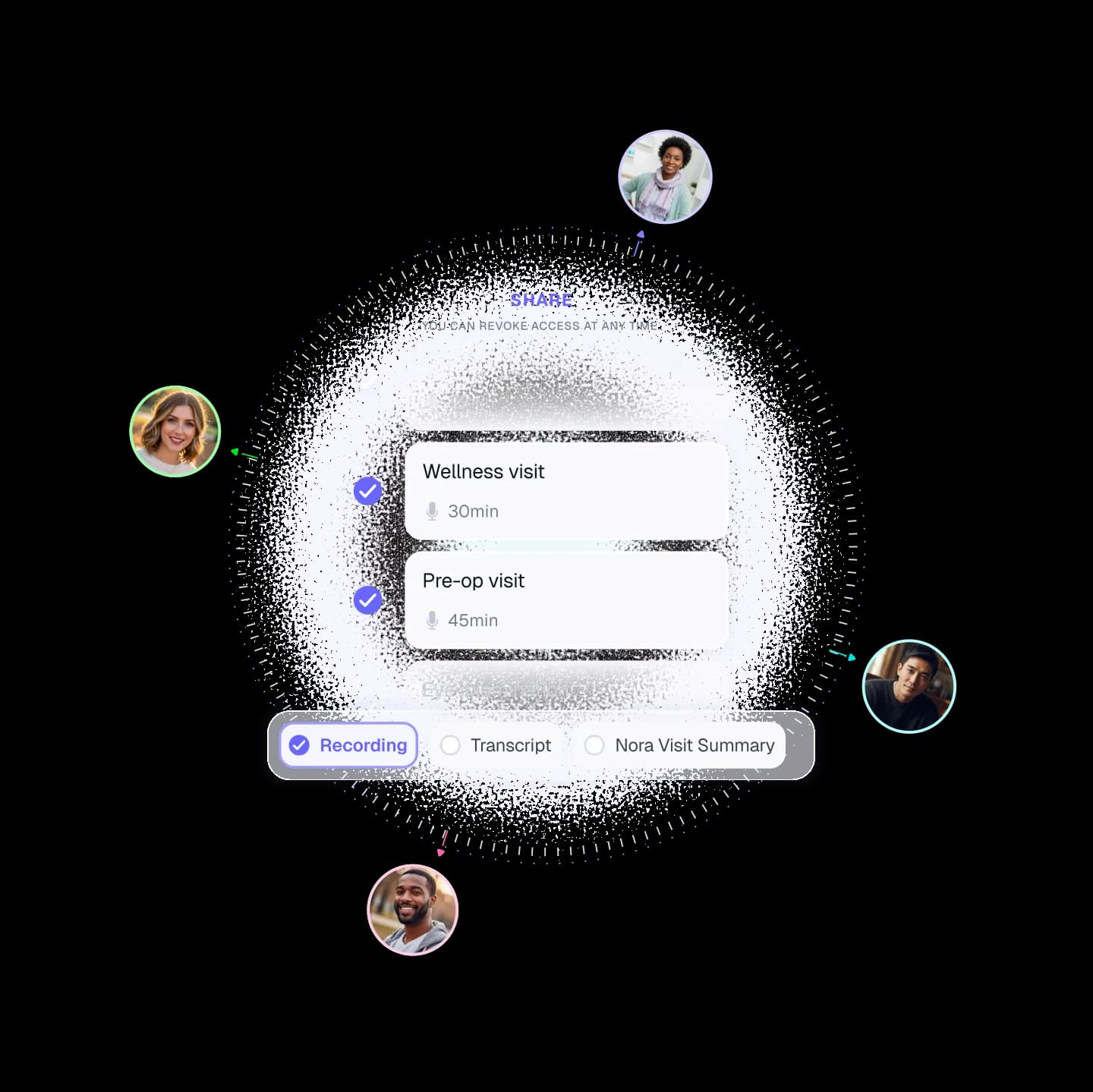
- Share it only with people involved in your care.
- Follow up with your clinician if anything in the recording is unclear.
A better way to record: AlignCare
A standard voice memo app can capture audio, but doctor visits deserve a more private and organized place. Visits may include sensitive details, medication names, test results, and medical terms that are hard to interpret later.
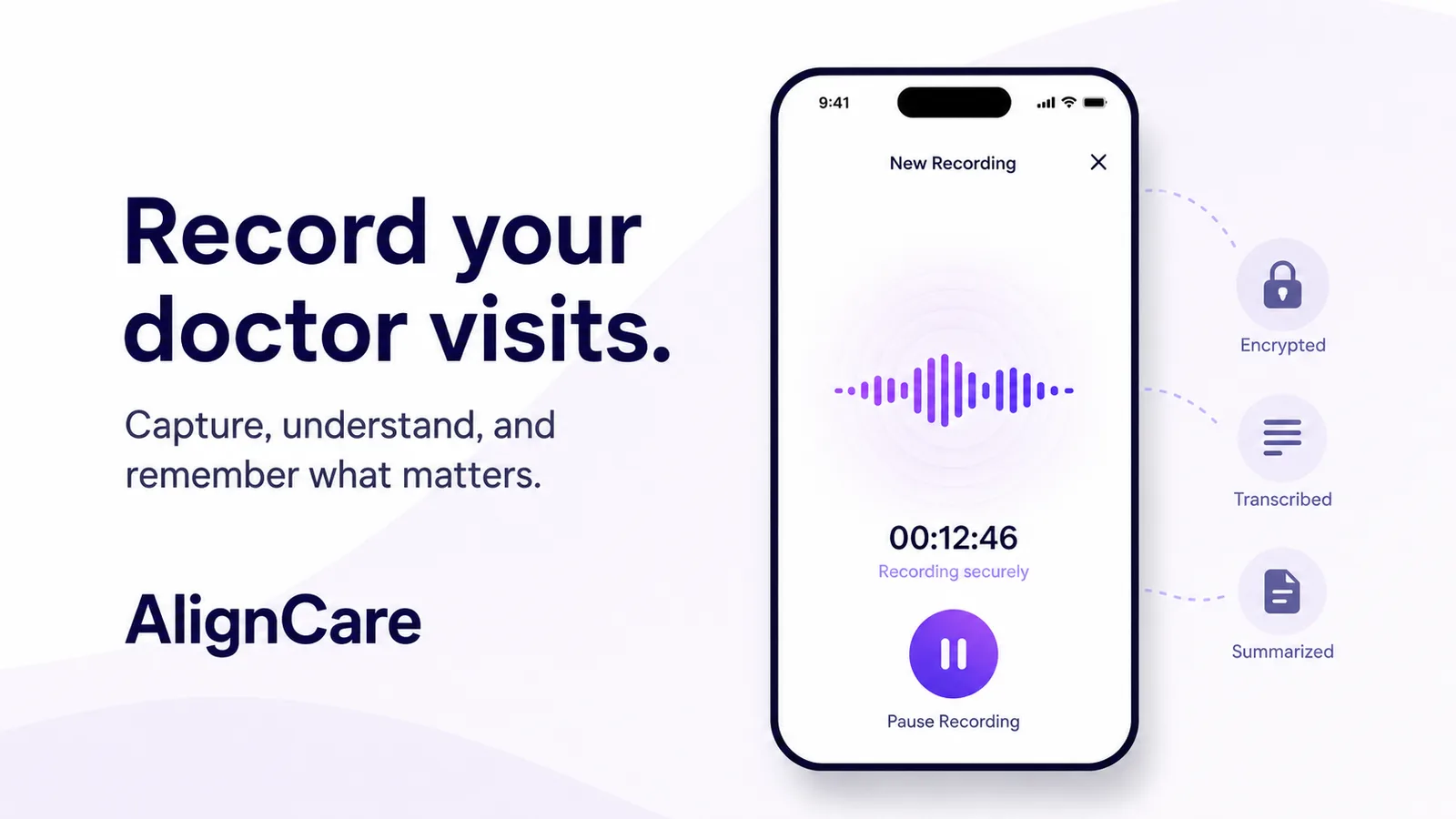
AlignCare is purpose-built for recording doctor visits on iOS and Android. It keeps visit recordings separate from everyday voice memos, encrypts patient data, and turns appointments into clear, plain-language visit summaries and full transcripts that patients can access from their device.
You can download AlignCare here: Download AlignCare
Before your next appointment
Before audio recording your next doctor visit, ask yourself:
- What state am I in?
- Is this visit in person, by phone, or by telehealth?
- Does my state require one-party consent, all-party consent, or notice?
- Does the clinic have a recording policy?
- Have I clearly explained that I am recording to better remember my care instructions?
In one-party consent states, your own consent is generally enough if you are part of the conversation. In all-party consent states, ask first and get clear permission.
Used responsibly, audio recording can help you remember more, follow instructions more confidently, and keep caregivers aligned.
Disclaimer
This article is for general informational and educational purposes only. It is not medical advice, legal advice, or a substitute for professional guidance. AlignCare does not provide medical advice, diagnosis, or treatment. Always consult a licensed clinician with questions about your health, diagnosis, medications, or treatment plan. Recording laws vary by state and situation, and they may change. Consult a qualified attorney if you have legal questions about recording a medical visit.